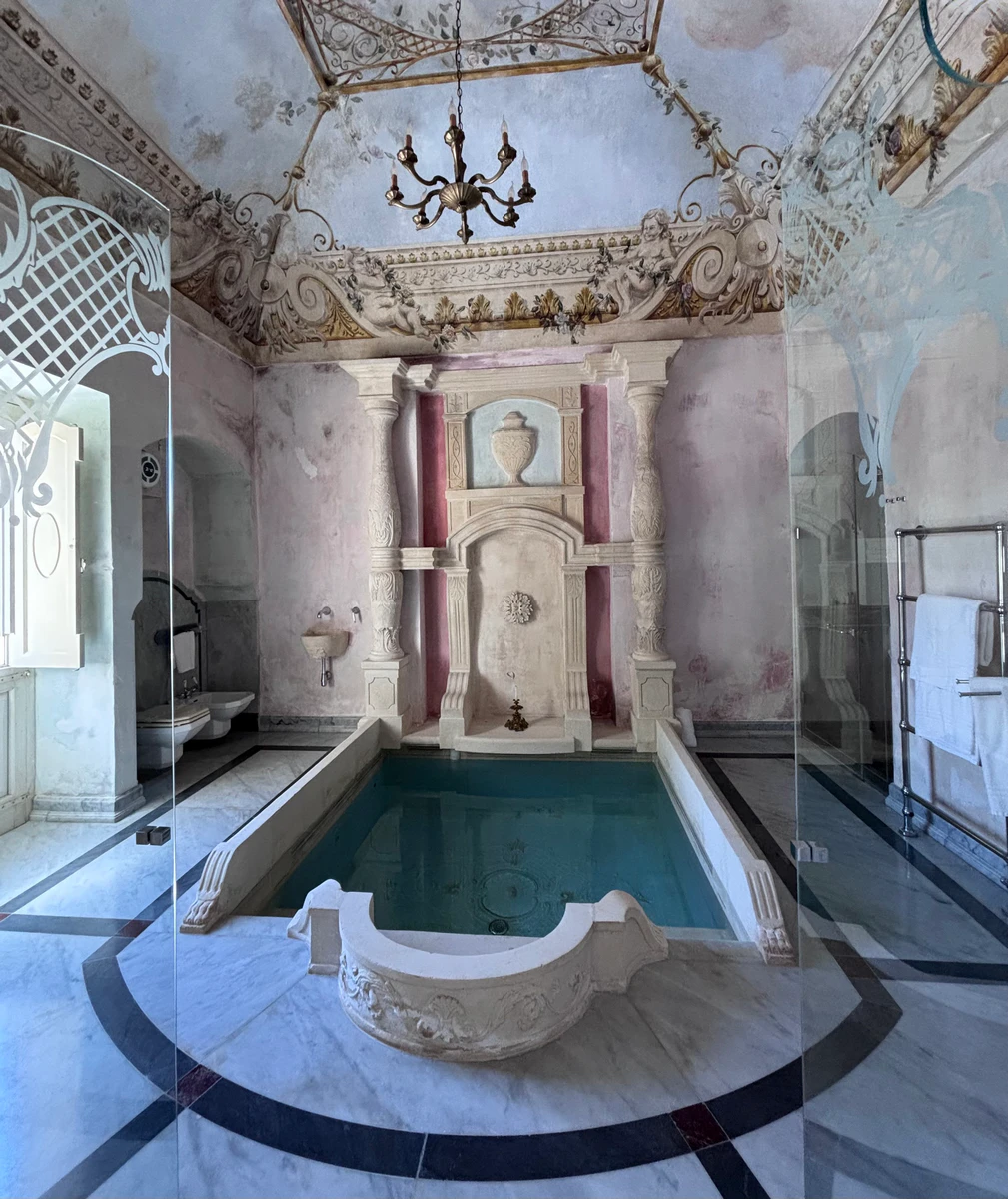

An ancient noble country residence, once abandoned yet still evocative beneath the weight of centuries, has been brought back to its former splendour after several years of careful conservative restoration.
I like to think that it was reborn because of a bond with the family’s land of origin, an ancestral call, driven by the desire to find refuge from the world.
Today it is a wonderful residence with extensive land all around it, a vineyard, an orchard, and still clods of earth awaiting sowing.
The silence in the evening is a privilege for those who choose to stay there, to withdraw in thought and observe the stars.
The walls belong to the past; some columns inside the ancient villa are steeped in history, and the family coat of arms does not betray it. Everything is enveloped in refinement and in a refined, authentic beauty that remains untouched.
Those who welcome you tell the story of the place with eyes that light up, almost shining with emotion.
The Salento area has a deeply rooted farming tradition. The ancient masserie, which developed especially in the 15th century, today represent precious places of memory of a rural presence devoted to agricultural production and to the defence of the land.
The same is true of the ancient underground olive presses, with their stone millstones built below ground.
Dating back as far as the Middle Ages, and developing extensively from the late 1400s onwards, they were used for pressing olives and formed a real working environment, where workers and draft animals spent their lives during the winter months.
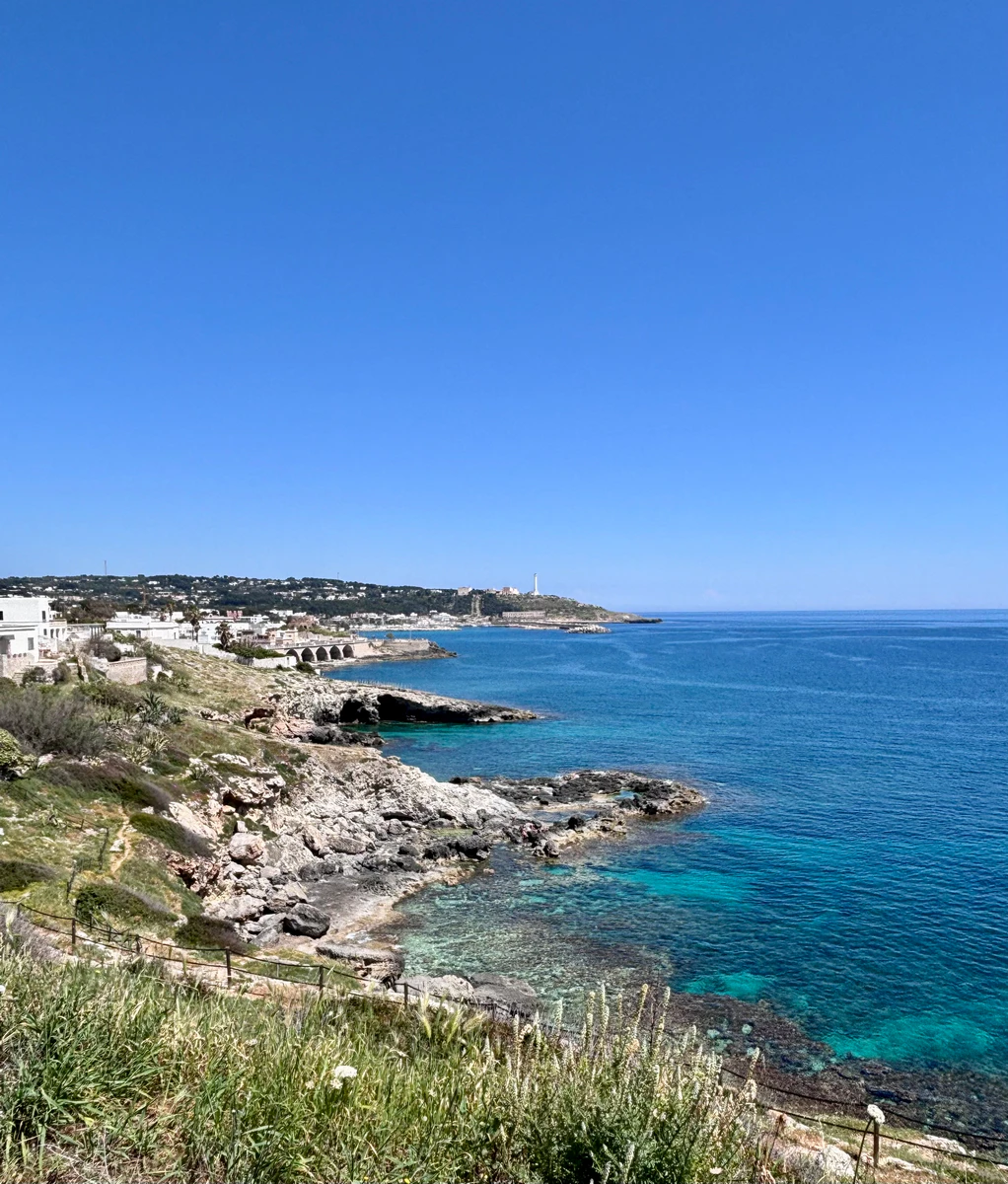
Salento has a wonderful coastline that embraces the Ionian Sea and the Adriatic Sea. Fine sandy beaches and small coves alternate with rocky shores interspersed with striking caves.
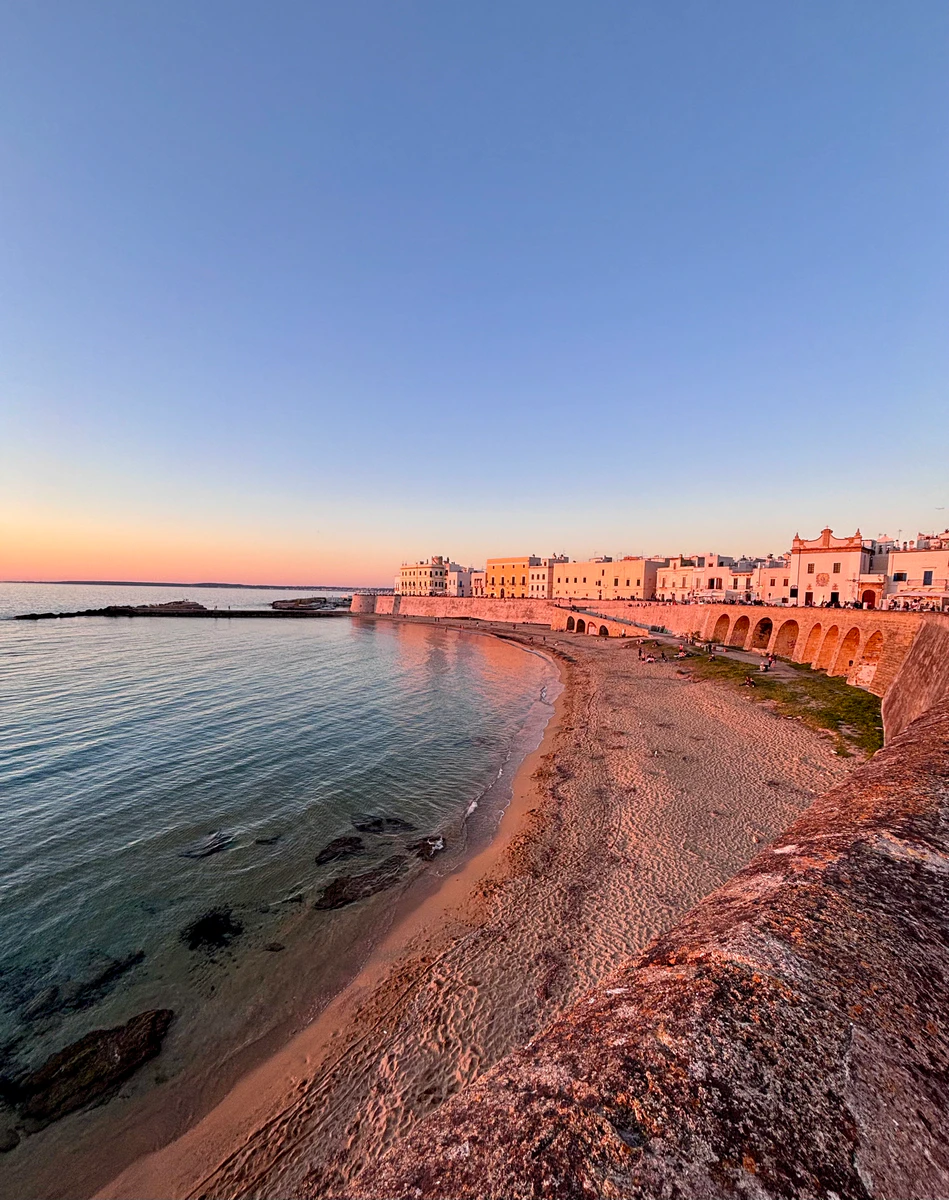
The ancient village of Gallipoli, with its white houses and Lecce-stone buildings, is worth even a brief visit. In the evening, the seafront comes alive with people crowding the seaside venues, and the sunset is truly wonderful.
Santa Maria di Leuca is the tip of Italy’s heel.
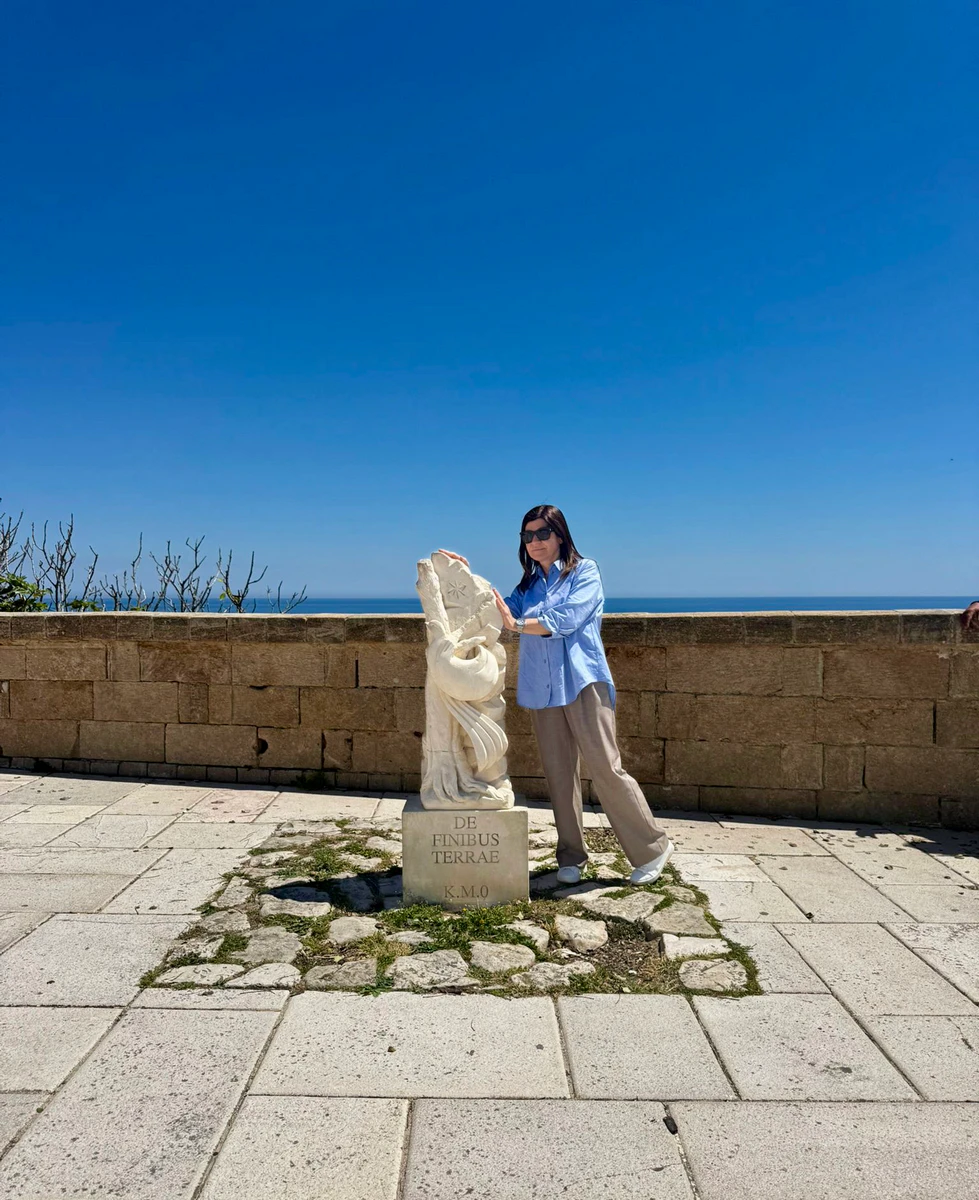
From its seafront, one can glimpse the rocky promontory of Punta Meliso, with the large square where the Basilica of “Santa Maria de Finibus Terrae” and the imposing 48-metre-high lighthouse stand.
A short distance away rises the majestic Monumental Waterfall, with its two staircases of 296 steps: a great architectural and hydraulic work that represents the terminal point of the Apulian Aqueduct.
At the centre of the two staircases, the imposing waterfall is opened on the occasion of important celebrations and on some summer evenings.
Punta Meliso, the southernmost part of Puglia, is the evocative strip of land where the currents of the Ionian and Adriatic Seas merge. The ancient Romans called it “De Finibus Terrae”.
#Puglia #Salento #Gallipoli #Leuca
Text and photos by Rita Levis